Understanding the Transition
One of the major transformations that a CDL driver can make in the trucking business is by becoming an owner-operator, and this transition readiness phase is often misunderstood. This change is not just a matter of moving from a company driver to being an independent operator; it is a complete transformation of the responsibility of financial planning, risk perception, and the way a driver expects freight, time, and income to flow. Most people think they should start making moves the moment they buy a truck or get insurance, but a driver must see this shift as part of a broader owner-operator checklist. However, the real transition readiness actually starts months before that event. It begins with the awareness of what this career path looks like and the driver’s willingness to bear the consequences of signing their name on a truck payment agreement, especially when truck payments influence long-term planning.
Key Readiness Components
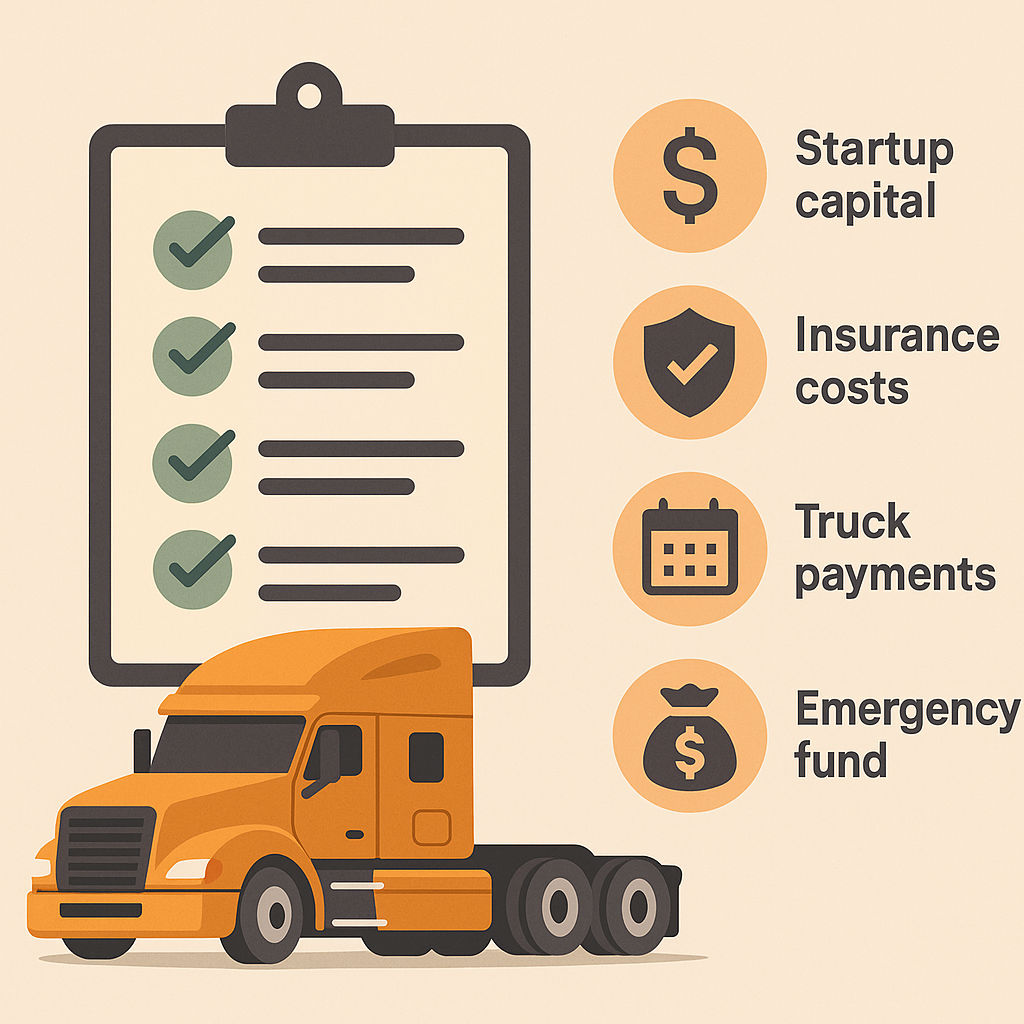
Financial Areas an Owner-Operator Must Evaluate
| Financial Component | Why It Matters |
| Startup capital | Establishes stability during first months |
| Insurance costs | Affects monthly cashflow and compliance |
| Truck Payments | Define long-term financial pressure |
| Emergency fund | Critical for breakdowns and slow freight |
HOW TO BECOME AN OWNER OPERATOR!
The readiness checklist is not just a checklist; it is a deeper examination of the Owner-Operator model. It is a model of the finances that keep a business alive, the skills required to stay profitable, the risks that can end operations within the first year, and the mindset needed to operate independently. These financial layers also connect directly to owner-operator finances, which influence how a small trucking business survives its early stage. Many drivers are tempted to make the decision simply because they dream of freedom or better pay, yet the success rate of new operators usually relies on whether they took the time to check their position without illusions. Transitioning into Owner-Operator is not just about being happy; it requires numbers, discipline, and careful planning that belong in any startup checklist.
Financial Preparedness
Core Financial Questions Before Transition
- Do you have enough cash for 60–90 days of operating expenses?
- Do you understand insurance premiums and deductibles?
- Do you have funds for maintenance, tires, emergency repairs?
- Have you projected realistic revenue based on lanes and seasonality?
The first blockade is the financial preparedness. The startup checklist extends far beyond the decision to buy or lease a truck, because the buy or lease truck choice shapes expected expenses for years. An operator must know exactly the expected costs, which include everything from insurance to servicing, from fuel and permits, to accounting and operational authority. Many drivers assume that the initial cash burn will be covered by the first settlement checks, but they don’t realize the truth, which is that the time to profitability varies largely depending on the business plan, the chosen freight, the truck payment structure, and the reliability of the lanes. Even an excellent driver can fail on financial aspects because of the rushed transition, and of not having the right financial projections.
The Owner-Operator finances bracket includes premiums for insurance, down payments for maintenance reserves, taxes, highway tires, roadside emergencies, fuel cost fluctuations, registration fees, and inspection costs. These Owner-Operator Finances must be mapped out like any business plan designed for resilience. A cash buffer is a must here because one surprise repair can wipe everything off. The USDOT number and operating authority registration must be done correctly, as the operating authority is a core requirement, and insurance coverage must be active before the operator even lifts a finger to carry the load. This is where long waiting or even finding out that premiums cannot be afforded comes up. What is supposed to be a simple and straightforward decision to “be your own boss” becomes the reality of always needing liquidity management, especially once you get insurance and verify that the policy meets federal requirements.
Owner Operator Guide: Start-Up Cost and Checklist (Hidden costs, Tips for Success, Must-have Items)
Skills and Operational Readiness
Skills an Owner-Operator Must Possess
- Ability to calculate profit per load, not per mile
- Understanding of contracts, detention, TONU
- Basic mechanical knowledge for truck maintenance
- Ability to plan routes and fuel efficiently
- Negotiation skills for working with brokers
Skills readiness is another layer of the checklist. It is simply not enough to own a Commercial Driver’s License because the Commercial Driver’s License alone is not the same as the capability to operate a full trucking business. Managing a trucking company demands logistics thinking, paperwork accuracy, negotiation skills, freight planning awareness, considering detention and TONU policies, basic mechanical understanding for truck maintenance, and the capacity to judge beforehand whether a load is profitable before accepting it. Those drivers who make the transition way before their time tend to rely on their emotions instead of calculations. They wrongly assume that the ability to drive alone is sufficient to make up for the lack of operational discipline, but the market does not pay for effort — it pays for margins.
Masters of the paper trail, owners need to keep track of invoices, monitor maintenance schedules, fuel tax filings, breakdown planning, and communication with brokers or dispatchers. If the operator should decide to lease on to a carrier, the workflow will be smoother; the carrier issues freight and compliance support, which in the end makes life easier at startup. Yet, being an independent operator takes a whole new level of skill. The driver needs to look for the freight, negotiate rates, deal with billing, read and verify contracts, know about detention rules, and thereby handle all the paperwork. Finding freight becomes a daily requirement, and the decision to Lease On or operate independently changes the workload dramatically. The subscriber to freight is no longer a passive process; it becomes something that you must do daily.
Risk Awareness
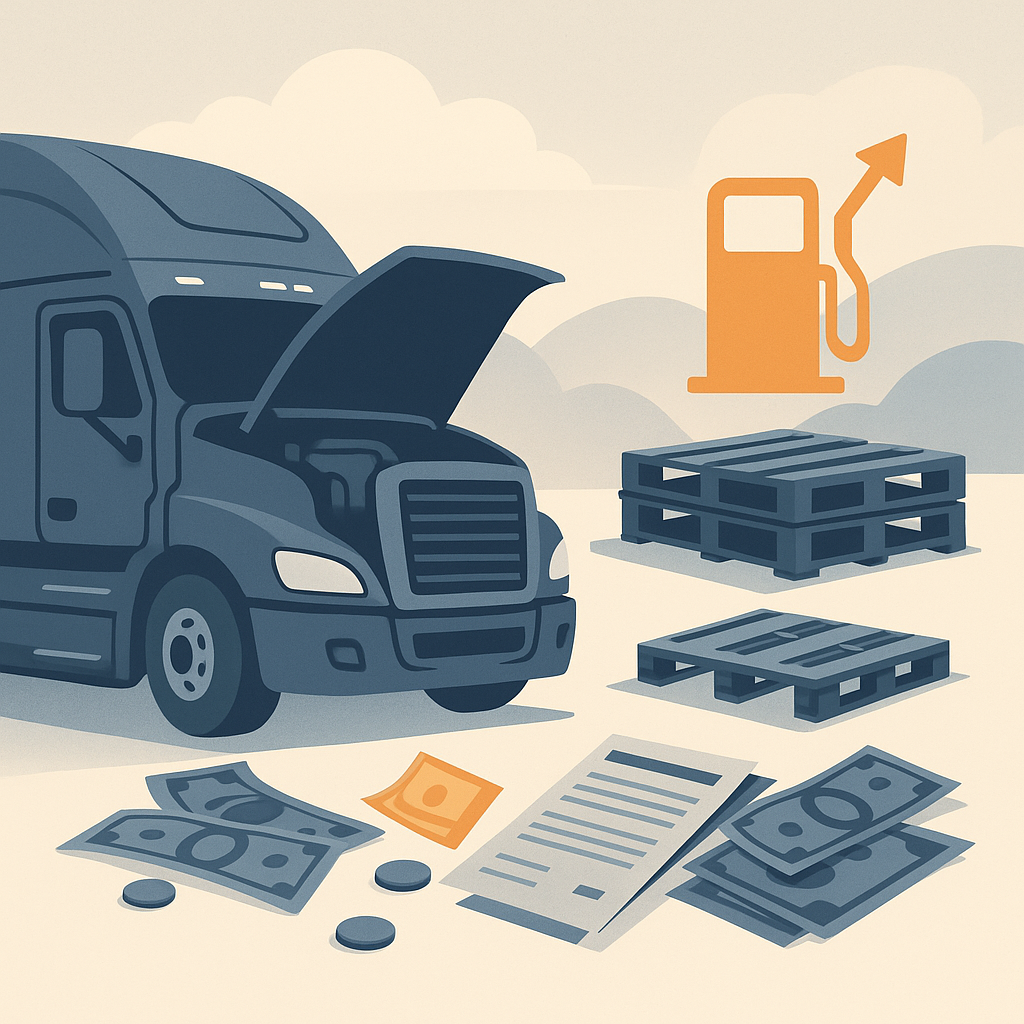
Common Early Risks Owner-Operators Face
- Sudden mechanical breakdowns
- Fuel price volatility
- Freight shortages during slow seasons
- Cashflow disruption due to late-paying brokers
- Underestimating tax obligations
Risk readiness refers to whether the business sustains the first 12 months. Normal Owner-Operators who are new to the trade think only of the fruitful side of it — getting bigger checks, more control, and greater independence. However, risks are tough nuts to crack, like mechanical problems, irregular customer needs, unpredicted downtimes, elevated fuel prices, bad routes, not paying taxes correctly, and low cash flows. These risks expand if operators underestimate their Expected Expenses or ignore their financial projections. Nevertheless, the highest risk is simply taking the plunge into the market without a buffer. A very good Owner-Operator checklist is never without a reserve fund set aside for repairs, slow intervals, deductibles, and unexpected expenses, which is the only way to protect the cash flow even during a week of profits being wiped out by a single breakdown.
Another huge risk is the ignorance surrounding truck payments. Lease-purchase contracts are sometimes attractive because they include low entry barriers, but usually involve higher costs in the long term. Purchasing a used truck in full is a way to lower monthly costs, yet it does increase repair risks. Leasing from a carrier might facilitate, but at the same time would limit autonomy. Each of the two models is subject to the driver’s financial riskiness, their Business Plan, and their comfort level with the Startup Checklist. There is no option that is the best for everybody; it is only what corresponds to the driver’s readiness and risk capacity.
Load Profitability & Business Behavior
Cost Elements That Must Be Counted per Load
| Expense Type | Impact on Profit |
| Fuel & Tolls | Major variable cost |
| Insurance | Fixed cost per month impacting margins |
| Maintenance Reserve | Protects against breakdown losses |
| Deadhead miles | Reduce revenue efficiency |
Additionally, the transition involves knowing how to properly assess loads. The profit is not just about the rate per mile. A rate that is inclusive of all the operational costs such as fuel, insurance, maintenance reserves, truck payments, deadhead, tolls, factoring fees, and any other cost that reduces the truck’s revenue is the right way to calculate profitability. New operators who accept all available loads would then find out that some miles are equally not so profitable. A strong business strategy forces the operator to take into account the real numbers, not just the surface numbers. This skill, if not mastered, will turn independence into stress and limit success rate potential.
The other side is to give the time, money, and effort needed. An Owner-Operator does not receive payments until the freight moves on. If the driver is not operating the truck, it will be a cost-weight on his business. A truck that sits idle because of maintenance, breakdowns, inspections, incorrect paperwork, or unplanned personal time creates financial pressure. Many new operators have no idea how difficult it is to act like a business. The responsibility shift is total: owning and operating, maintaining, planning, scheduling, billing, and breakdown — all on one person. This is where time to profitability becomes a reality check.
Independence vs Leasing
Differences Between Leasing On & Operating Independently
- Leasing on reduces paperwork
- Independent authority gives full control
- Leasing provides freight consistency
- Independent operation increases income potential but also risk
- Authority requires compliance management
The final step of the readiness deal is to be clear about the difference between leasing on and operating under one’s own authority. Leasing on lets you access freight and puts less weight on your shoulders. Operating independently gives you full control, but it also gives you the full responsibility.
 Without having strong experience in compliance, billing, and customer relations, a driver can create unnecessary setbacks if he goes independent too early. The checklist for readiness is meant to be a safeguard against these types of mistakes which come from a lack of honest evaluation of what can be managed and what cannot.
Conclusion
Embracing a life as an Owner-Operator is more than just a high spirit; it takes readiness and preparation. The drivers who hit the jackpot do not rely on unexpected strokes of luck. They depend on strategies, financial discipline, operational skills, and risk awareness. When the transition is done step-by-step, with realistic expectations and a firm understanding of the financial obligations and costs, the situation can evolve to economic gain, whether the driver decides to lease on or eventually operate fully independently under their own authority. Above all, the premature transition is a one-way-to-overwhelm trip.
Every Owner-Operator quickly learns that the truck is not the business; it is the decisions made by the driver that matter. Preparedness is the true driving force behind the success of any trucking business, especially for those who begin the journey with only a commercial driver’s license and must grow into the broader responsibilities of ownership.
Leave a Reply