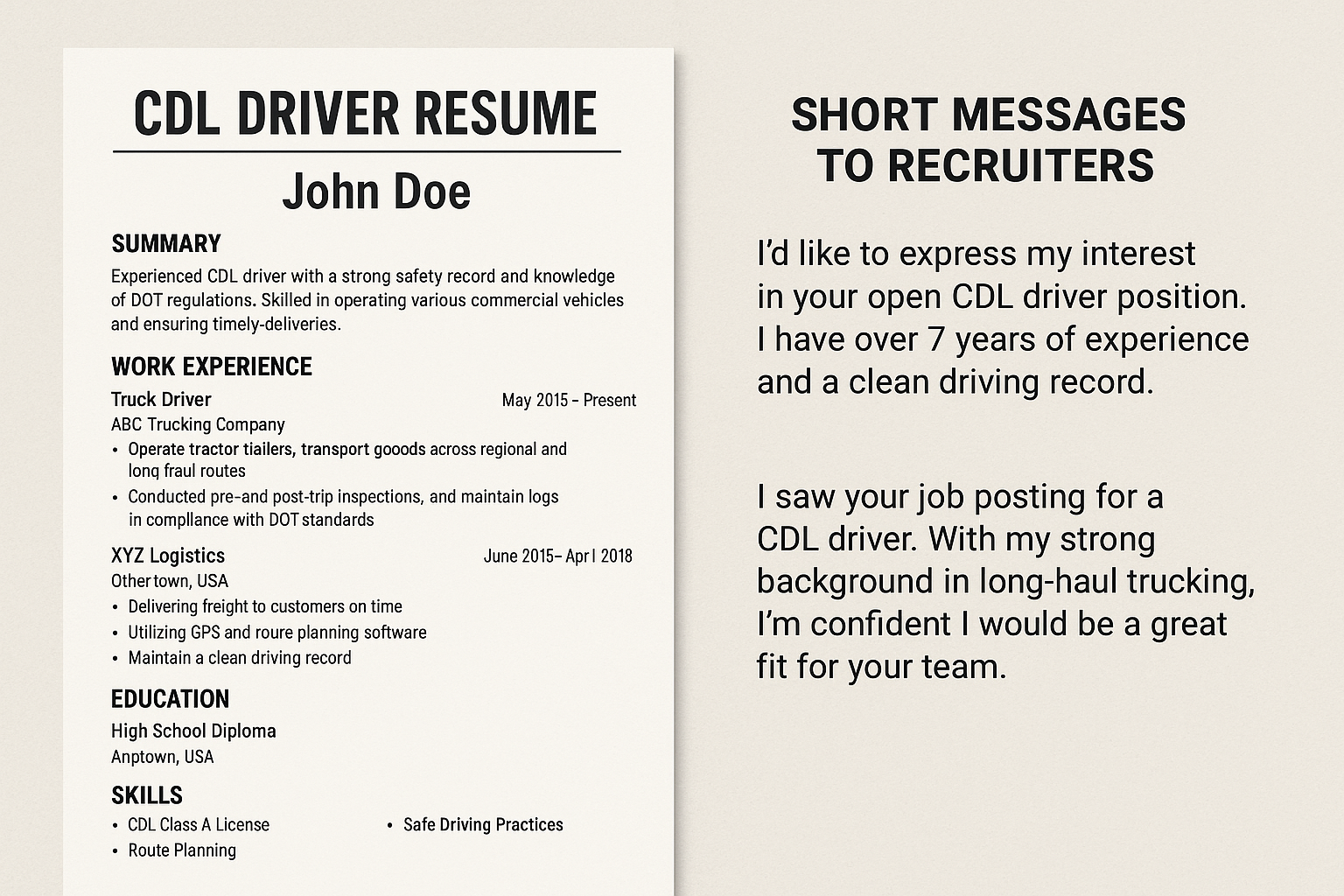
Understanding the Purpose of CDL Resumes and Messages
In the minds of CDL drivers searching for employment, the most considerable barricade that they will encounter is surmounting dealership interviews or putting up enough driving experience to get hired like in reality, but the real hurdle is much ahead of the process.
The real car insurances travelers who take a big part in driving, make the reservations, arrive at the location, and drive long have the driving experience that the insurance executives are looking for.The most important thing in the transportation are trucks which are the most important thing in the truck driving; without trucks and other commercial vehicles, there will be no driving. CDL templates and templates of introductory messages for drivers have been very helpful to drivers in overcoming the job market saturated with competition and getting a particular position in trucking. That is the main reason the CDL driver resume formats and short recruiter messages are the main tools to approach the bitter competition in the trucking sector.
Why the Resume Matters More Than Drivers Realize
A lot of drivers make the mistake of not respecting the power the resume has in securing a job. They may boast about their prior jobs such as being over-the-road drivers with long-duration hauls, local freighters, or handling tarped cargo under tight DOT regulations but their presentation of the skills is not always great. The driver is the one providing the information and not the recruiter making the guessing who the driver is.Recruiters are not reading obfuscating messages; they are evaluating what is on paper in a straightforward way. A truck driver resume that is straight to the point, fact-based, and has no duplicating sentences convey the right work history; Class A CDL; hazmat certification (if any); tanker ability; and flatbed background can make a candidate advance immediately to the next step. For many hiring managers, a clean trucker resume is the quickest way to understand whether a driver fits the lane.
What Recruiters Look For First: The Summary

The first element that recruiters look at is the professional summary. Most drivers avoid this or write it vaguely, for example, “Responsible driver seeking a new opportunity.” A recruiter reading this sees nothing different. A real summary is a brief statement of how many miles the driver has driven, what kind of equipment he/she uses, safety performance, and if any endorsements are included. HOS rule familiarity, DOT compliance, GPS proficiency, cargo handling, core skills, or any specific freight a driver managed should also be in the summary. Recruiters really desire a short confirmation that the candidate meets the fundamental requisites even before scrolling.
Shifting Gears: Strategies for Modern Truck Driver Recruitment & Retention
Work Experience and How Drivers Undermine Themselves
Then comes the section filled with work experience, and this is where many CDL drivers, just as a matter of fact, most of the time throw the spanner in their own wheel. Recruiters do not want storytellers; they want clarity. They desire proper dates, detail of tasks, and determined safety performance. For instance, by saying “operated long-haul reefer routes across the Midwest, ensured on-time delivery and temperature control, maintained clean driving record during employment,” the operator proves his worth much more than simply saying “OTR driver for three years.” The principle is the more specific the words are, and the more measurable the results, the easier it is for the hiring person to get the message about the trucker.
The Role of Skills and Why They Must Be Listed
Drivers sometimes consider whether to include skills that are self-evident, like those of backing, coupling/uncoupling, ELD usage, or pre-trip inspections, as every CDL driver knows them. However, recruiters always prefer to see them because it is convenient during the screening process. “Core skills” sections broker recruitment quickly, whether it is for a dedicated lane, tanker position, flatbed assignment, or hazmat route. Even if these skills appear to be implicit, mentions of them offer the resume structural integrity and help recruiters determine the proper fit without any guessing.
Driving Record and Certification Section
Another part of the document should cover the driving record. Companies often raise this issue at the very beginning of the recruitment process, as violations and other issues strongly influence employer decisions. Each resume does not need to include extensive details however a statement of a clean record, the period during which they have been accident-free, or steps taken to achieve safety are good inclusions. Drivers who additional licenses or certificates should focus on them too; for instance, the proper mentioning of hazmat procedures, tanker handling, or flatbed securement rules will always be useful to drivers.
Suggested Resume Layout for CDL Drivers
| Resume Section | What Should Be Included |
| Professional Summary | Miles driven, equipment type, endorsements, safety record |
| Work Experience | Dates, routes, equipment, measurable achievements |
| Skills / Core Skills | GPS, cargo handling, HOS, DOT, equipment abilities |
| Driving Record | Violations, accident-free periods, safety steps |
| Certifications | Hazmat, tanker, flatbed, TWIC, state endorsements |
5 Tips for Making an Excellent Truck Driver Resume
Why Templates Help Even Experienced Drivers
In recent times, CDL driver resume templates gained a lot of ground because they give structure to the drivers and guarantee that the necessary information is included. Templates serve as guidelines and help drivers move away from the confusion and the repetition of the sentences that most loser-resumes have. If they have a template that is laid out well, they are more likely to present themselves in a competent way, create a logical order, and avoid the clutter. Seasoned drivers on the move who rely on templates to ensure both uniformity and the elimination of errors especially value their usefulness. Structured resumes are also preferred by recruiters as they can browse through the document quickly, hence increase the rate of callbacks.
The Role of Short Messages to Recruiters
But what is surprising, is that the story of the resumes reaches only a half. A legitimate conversation with a recruiter is often the first step that leads to an open application. A driver could send a text message, put in a job post reply, or just leave a note quickly online. Short messages have reshaped the hiring process completely and if they are written in the right form they will often determine if the recruiter will respond, how fast he t be able to respond and what are candidate’s assumptions on him. In many fleets, recruiting text messages have fully replaced long email threads.
Examples of Effective Short Recruiter Messages
- “CDL-A, 3 yrs OTR, based in KS, seeking reefer or flatbed, available Monday.”
- “Local delivery or regional lanes preferred, hazmat + tanker, clean record.”
- “Class A CDL, 5 yrs long-haul, open to Midwest lanes, can start next week.”
Common Message Mistakes Drivers Make
The most common problems drivers make is that they write messages that are too short or too vague. A recruiter who receives a message that says only “still hiring?” has no information to work with. It forces them to ask multiple follow-up questions, and in busy hiring seasons they may skip the candidate altogether. A more effective message should contain the driver’s CDL class, years of experience, location, preferred freight type whether long-haul, tanker, flatbed, hazmat, or local delivery and availability. This sort of information immediately helps the recruiter to find the right line and divert the candidate to the correct specialist.
Why Follow-Up Messages Matter
Another essential issue that drivers fully ignore is communication of their job application status. Most of them belief that after they send the resume, they should just passively wait. Recruiters often handle the applications of many drivers at a time, and a little follow-up touch can put a driver straight back on the list. Actually, the tone is the thing that matters. A well-structured and respectful inquiry like, “May I just check the status of my application? Please let me know if you need any additional documents.” is considered as far more effective than “Did you forget about me?”. Drivers who communicate professionally — from the resume submission to recruitment-interview scheduling — in general play a substantive role in the fast acceleration of the process.
Strong vs Weak Recruiter Messages
| Weak Message | Strong Message |
| “Still hiring?” | “CDL-A, 4 yrs experience, located in MO, seeking tanker or flatbed, available Fri.” |
| “Any jobs?” | “Class A CDL, hazmat certified, 2 yrs regional, prefer SE lanes, can start ASAP.” |
| “Call me.” | “Just applied for the regional position; verifying application status. Need any documents?” |
Certifications and How They Influence Hiring
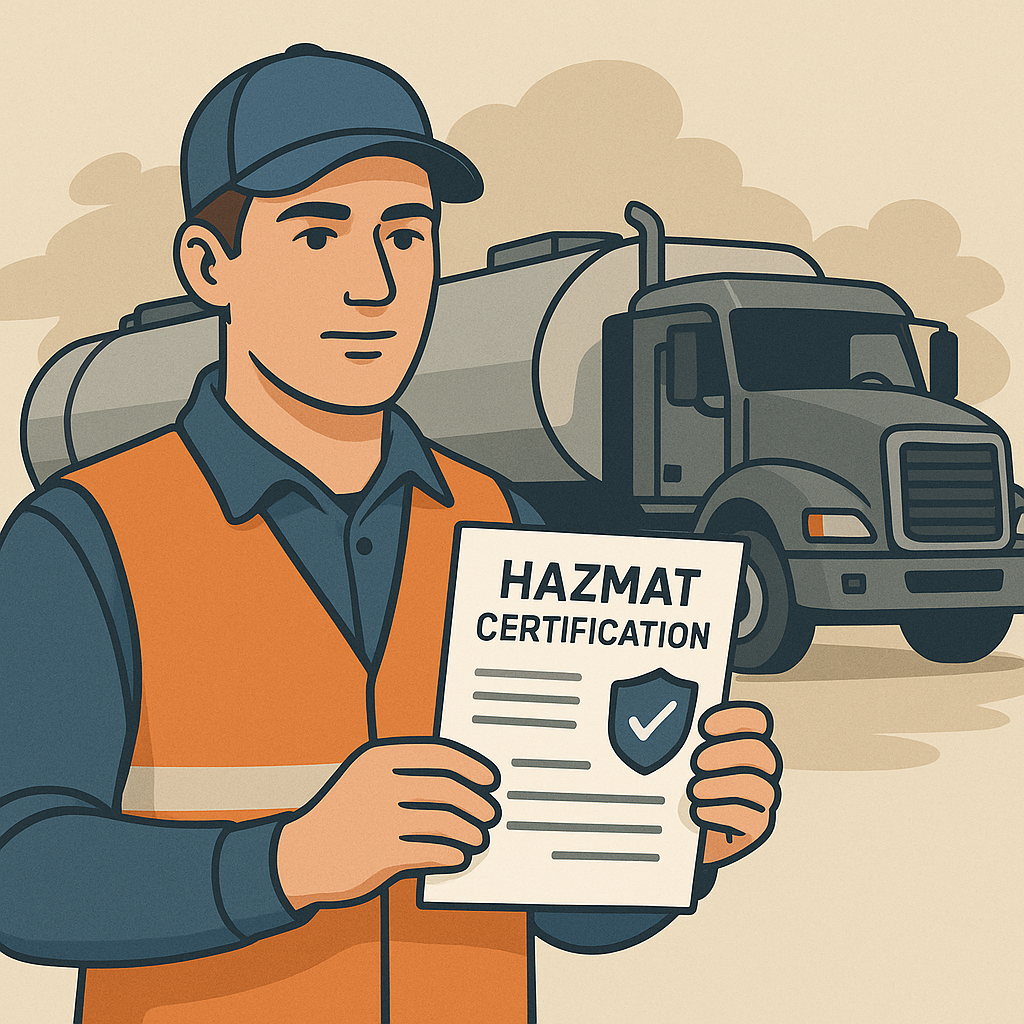
There are advantages over templates and work messages as drivers should also recognize no matter what they do, when the end result goes to replacement for goods that are of insufficient quality, work history consistency, for example, is the factor. Unexplained breaks or frequent job changes cause doubts, especially in OTR and tanker positions which need long haul reliability significantly. Certifications are another significant part in this process. The hazmat or the tank car certification will make a drivers cap sheet boom. This is because these loads seek additional compliance and safety awareness. Recruiters also divide the candidates based on the endorsement as specialist freight pays more and requires reliable workers.
How Recruiters Evaluate Candidates Beyond the Resume
Yet, new ones, for instance, IV long haul, local delivery, flatbed assignments, and the ones that need special treatment all need different types of respect, time management, and learning DOT. Drivers who manage to escape their own box stand out, as truckers work in varied fleets and like those who will support multiple lanes or equipment.
Some drivers are cautious whether to put soft skills on a resume because they think trucking is only technical. But today more and more recruiters are in the hunt for candidates’ abilities in communication, punctuality, problem-solving, and reliability. This is because these skills have a direct effect on customer satisfaction and operational efficiency. A trucker who can explain delays, handle unforeseen issues, or tweak promptly to changes is more valuable to a company than someone who merely hops in and out of the truck.
Automated Filters and Why Formatting Matters
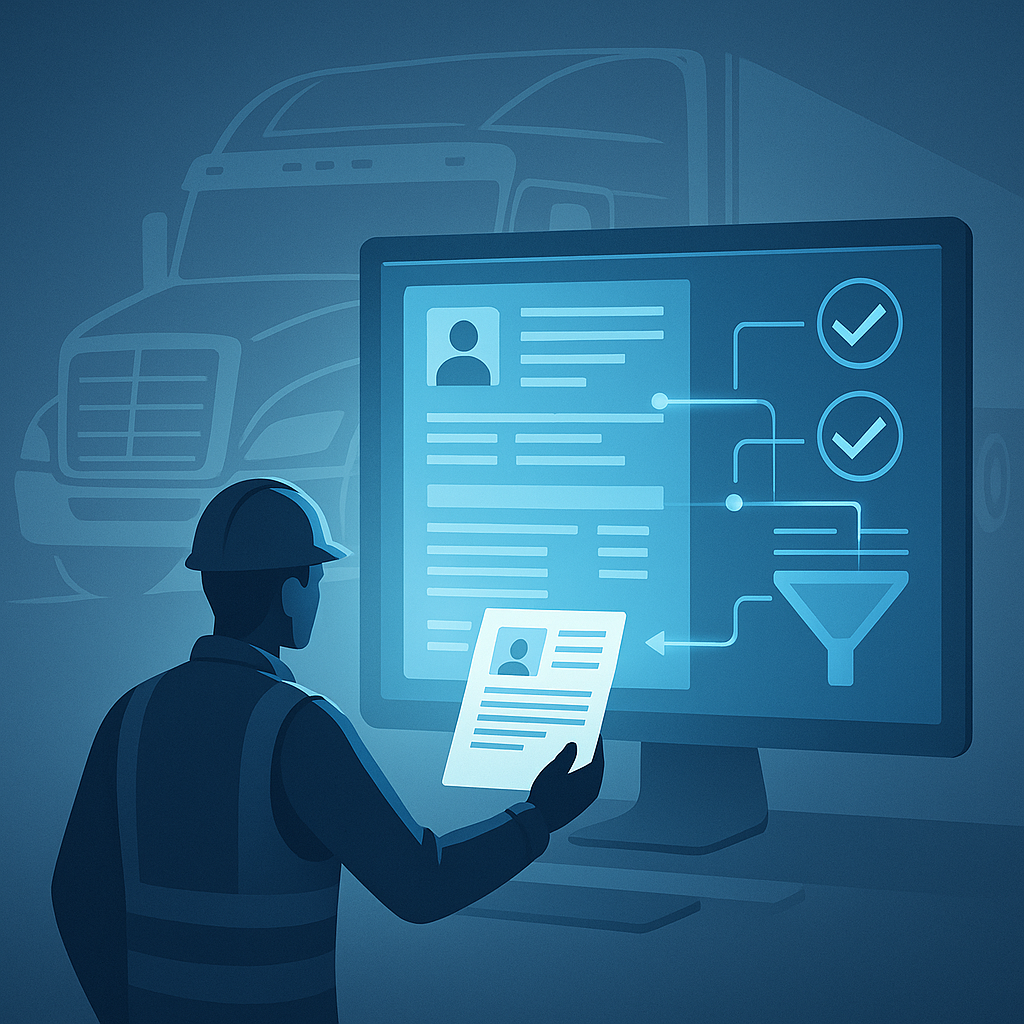
The use of automated systems in most companies to screen the resumes, therefore, makes it more essential than ever to adhere to formatting and clarity. This is where templates come good because their structure is a key to the filter that explains “clean sections” and words that are naturally linked to trucking: DOT regulations, HOS rules, cargo handling, pre-trips, logbooks, safety protocols, equipment types, and compliance standards. These phrases give a hand to the resume in an automatic filter and thus, ensure its reach to a human recruiter.
Preparing for Recruiter Calls and Screening
The digital hiring era also innovated the interview process. Recruiters often do this via telephonic way or short screening calls to verify eligibility. Drivers who prepare a simple list of talking points—previous equipment operated, preferred schedule, home-time expectations, regional or long-haul preferences?—otherwise, they perform better at the early stages of the interview. Recruiters would rather see full transparency on this as it would enable them to place the drivers on the correct paths, whether it be flatbed, tanker, hazmat, or reefer.
Helpful Talking Points for Recruiter Calls
- Preferred lanes (regional, long-haul, dedicated, local)
- Availability dates and home-time expectations
- Certifications: hazmat, tanker, TWIC, etc.
- Equipment experience: flatbed, reefer, dry van
Final Thoughts
At the end of the day, CDL driver resume templates and short recruiter messages are more than a piece of paperwork: they are the comprehensive space for all hiring. They are responsible for the entire process from the drivers’ perspectives, their perception, through the speed of movement, down to whether they get the preferred type of freight. Whether it is a newly licensed driver or somebody with even a decade of long-haul trucking experience, the logic remains the same.: clean information and efficient communication are the core drivers of a successful job application.
If drivers clear a path, using templates, refining their professional summaries, highlighting endorsements, and sending effective short messages, nailing the job should be a far better deal for them. They do not ask for a perfect resume or literary wit; all they need are clarity, accuracy, and relevance. If a driver gets the format of their background right, the chance of them getting into competitive areas like tankers, and hazmat also can go up though they learn it through concrete practice.
In the first place, these basics will help in achieving success in the hiring process. The resume is the key, the short message gets the attention, and the conversation that follows allows the driver to show professionalism and preparedness. In an industry that changes overnight, the one who is able to present themselves nicely and good communication skills remaining strongly advantages any truck driver can have possible.
Leave a Reply