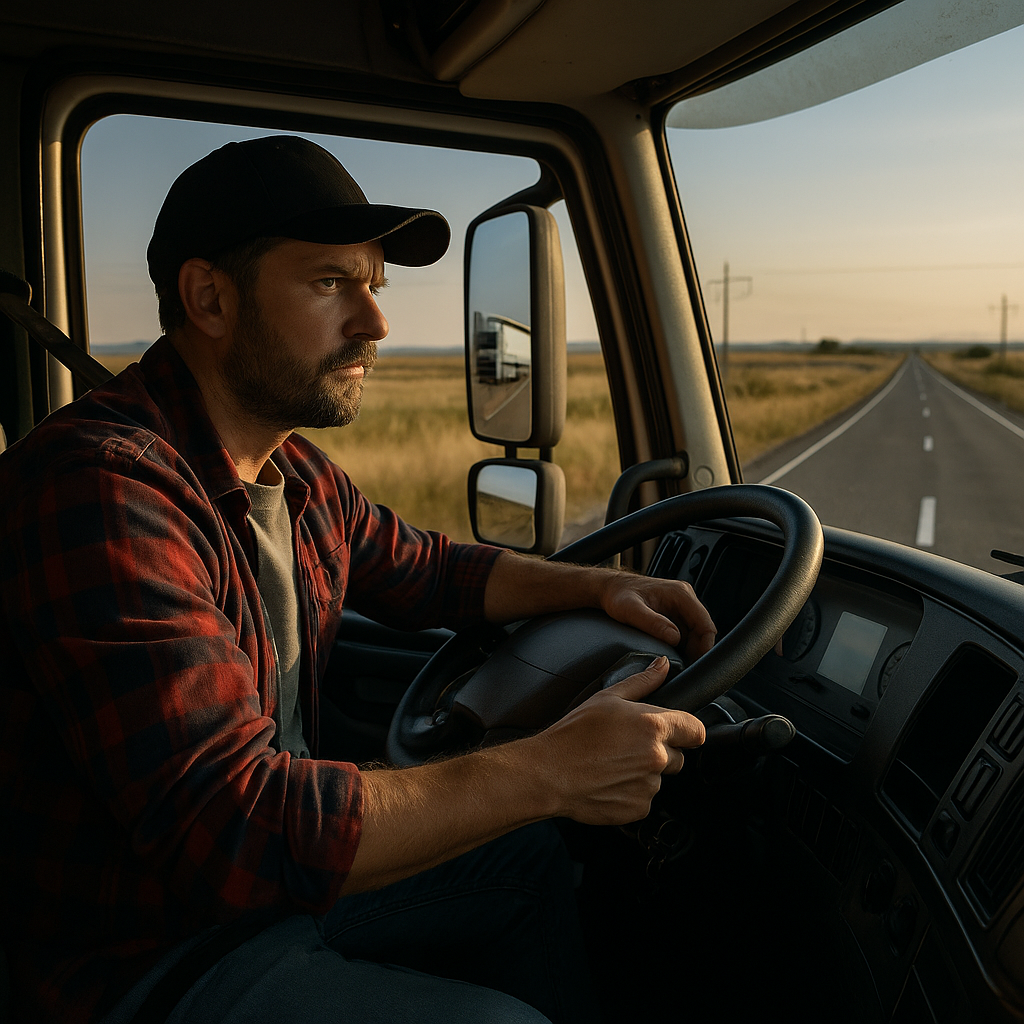
For the majority of the CDL drivers, the beginning of their road experience is with over-the-road driving. Over-the-road (OTR), often referred to simply as over the road trucking, is the fastest entry point to a trucking career, the easiest way to find a job, and for some people, the most real form of truck driving. Experiencing long highways, different states, new shippers, and unpredictable schedules are the things that define the first years with the steering wheel and shape the early driver lifestyle.
These early years are defined by:
- long highways
- different states
- new shippers
- unpredictable schedules
For some time, this kind of living seems like freedom and full-time OTR is like selling freedom. But as months become years, home, and personal space are the priorities that begin to shift, especially with family and personal aspects entering the scene.
The shared driver story
This is the driver story that many truck drivers think is their own. It does not tell about quitting trucking, nor about chasing higher pay at any cost. It’s about a truck driving transition that moves from OTR to dedicated driving, which involves first of all, consistency, family stability, and home time, and which in the long run, is best for the driver. Transitioning from OTR to dedicated is not a downgrade; it is the most sustainable version of trucking for many drivers who are changing trucking jobs for the right reasons.
What OTR builds — and what it takes away
Over-the-road driving has its special features for the drivers’ development. It cultivates:
- flexibility
- self-sufficiency
- the ability to work under high pressure
OTR drivers manage their own time, face unpredictable logistics issues, and drive in different areas and to different customers. Nevertheless, this very same flexibility can drive people to the point of not having a routine in their lives. Time at home becomes negotiable, birthdays and milestones are missed, and phone calls are the only way to stay in touch when resting in the truck stops during long over the road stretches.
When priorities begin to shift

The hard truth about OTR drivers is that it is neither an entirely negative nor mostly positive thing. You see, there are drivers who indeed enjoy:
- the length of time they spend away from home
- the chance to drive more
- the variety of routes
But, as family situations deteriorate, the emotional burdens of life on the road become harder to push aside. No longer does the drive of being away for several weeks per year line up with the desire for a stable, predictable income, a healthier driver lifestyle, and a sound mind.
Why dedicated driving enters the picture
This is usually when dedicated driving comes into the picture. Contrary to OTR, the dedicated routes offer drivers a sense of structure and schedule. They know:
- their destinations
- who they are delivering to
- when they are expected home
This consistency becomes the stiffness of the family and the strength of the truck driver. The truck driver experience turns from survival to sustainability, highlighting the core benefits of dedicated operations.
Tempo, routine, and daily life
One of the significant differences that the drivers notice when they turn from OTR to dedicated is the tempo of work. Dedicated routes are usually run on a series of pre-scheduled times that are assigned to particular customers or distribution hubs. This in turn, allows the drivers to plan their leisure time which outside of the truck includes:
- family dinners
- school events
- normal sleep cycles
While odometer readings may be lower than OTR long hauls, the steadyhood typical of dedicated or even regional driving makes up for it. See Upperinc’s overview of dedicated truck routes and driver schedules Local vs Dedicated vs Regional vs Longhaul (OTR): Pros and Cons of Each (Hometime, Pay, Workload)
Emotional control and reduced uncertainty
Most people do not fully appreciate the emotional impact of this transition. With dedicated driving, there is no uncertainty. Drivers will not wake up anymore wondering:
- if they will be sent to some unfamiliar place next
- when they are coming home
This control gives the driver a sense of well-being and reduces burnout. Thankfulness for the changes is not limited to logistics, it is psychological as well, and directly affects long-term family stability.
Key lifestyle differences between OTR and dedicated driving
| Aspect | OTR Driving | Dedicated Driving |
| Home time | Infrequent, variable | Predictable, scheduled |
| Routes | Constantly changing | Fixed or repeating |
| Income structure | Mileage-heavy | Balanced, often guaranteed |
| Family involvement | Limited | Active and consistent |
| Stress level | High variability | Lower, more stable |
Income stability and planning
Another point that drivers keep in mind concerns the stability of the income. OTR drivers earn more in high-demand periods; however, they suffer from income fluctuations during the slow freight seasons. The dedicated drive generally provides steady income, including a minimum delivery guarantee for the drivers. In spite of the fact that dividends during the highest peak are less, the ability to have a monthly plan becomes a primary advantage.
This allows:
- easier financial forecasting
- family planning
- alignment with life goals
The financial forecast easily supports family planning and life goals, which many CDL drivers stress after the navigator years on the road.
Relationship with the company

It is worth mentioning that the connection of the drivers to the trucking company also changes. Dedicated drivers devote themselves mostly to one customer or few dispatchers. Communication gets better, expectations clarify, and drivers feel more like persons than the moving parts in a machine. This belongingness is part of the equation of retention and job satisfaction. Drivers who feel that they are appreciated and listened to, stay longer in the company.
The trade-offs of dedicated routes
Dedicated routes can be challenging as well. Repetitive runs can be tedious for drivers who enjoy variety. Fixed schedules may involve:
- early morning runs
- night runs
Some dedicated accounts may have tight delivery windows or frequent stops. However, for those drivers who wish for stability, these downsides are often tolerable. The key difference is that the pitfalls show up beforehand rather than out of the blue on the line.
Changing priorities over a career
The majority of drivers regard this shift as a shift in the priority list. The initial stage for a truck driving career is the accumulation of miles and learning on the job. Then, the main aim shifts to sustainability. Dedicated driving and regional driving present a chance for the drivers to work in logistics while aligning their careers with their personal obligations. This balance is significant in ensuring long-term driver retention across the sector.
Common reasons drivers switch from OTR to dedicated
| Reason | Impact on decision |
| Family responsibilities | High |
| Desire for routine | High |
| Burnout from long hauls | Medium to high |
| Income predictability | Medium |
| Health and sleep quality | High |
Health and long-term well-being
Health-related matters are also a significant variable. OTR schedules frequently lead to:
- sleep deprivation
- bad eating habits
- decline in physical activity
However, dedicated routes alongside their challenging demands allow drivers to create their own routines. Improved sleep, pre-planned meals, and scheduled exercise have positively affected both their physical and mental health. These effects consequently diminish fatigue and increase job satisfaction in the long run.
Choosing the right dedicated position
The transition period itself needs to get careful attention. Not every dedicated position is the same. Drivers should check:
- route regularity
- their home time guarantees
- pay system
- the company’s support
Acquiring knowledge is the best way of preventing disappointment. Stability should not be labeled but be realized in the actual working conditions; this is what the experienced ones know when changing trucking jobs.
A personal turning point
For many drivers, the transition marks a turning point in their lives. It may occur after:
- the birth of a child
- a health scare
- the idea that being away constantly is no longer valid
The story of the driver is not about being overly dramatic; it is more of being practical and realist about everyday life. Driving dedicated is often an act of responsibility rather than a desire to excel.
Benefits of dedicated driving for driver well-being
| Area | Outcome |
| Mental health | Reduced stress and anxiety |
| Family relationships | Stronger, more consistent |
| Financial planning | Easier and more reliable |
| Job satisfaction | Higher long-term |
| Career longevity | Extended |
Industry-wide impact
The industry also benefits from these transitions. Dedicated drivers are these people who have:
- a high retention rate
- better performance
- stronger customer involvement
From the logistics point of view, this process flows, it saves resources, and it improves the quality of service. What is favorable for the driver will also be favorable for the trucking company.
OTR and dedicated — not opposites
OTR will always have its rightful part. It plays an essential role in the freight transportation across long distances and remains at the top of the list for drivers who are looking for independence and variety. Dedicated driving is not a replacement but rather a detour in the trucking career road. Both roles are indispensable and the decision rests on the driver’s life situation at that moment.
Long-term perspective
For CDL drivers who are thinking of this move, the decision has to be founded on their end goals that are long-term and not short-term gains. A trucking career is not a sprint; it is a marathon. Remaining healthy, present, and financially stable matters more than hitting the highest weekly miles in the long run.
Redefining success in trucking
The transfer from over-the-road to dedicated driving is an advancement in the driver’s career. It highlights a deeper understanding of personal limits and priorities. Family stability, predictable home time, and consistent income as a measure of success redefine driving skills.
At its core, driving dedicated is not about taking steps backward. It is about taking steps into a reality of truck driving which is beyond the cab. That change is the major part of the driver’s life for many drivers.
FAQ
1. Is it a backward step for a truck driver career to transfer from OTR to dedicated?
Not completely. For a lot of drivers, this transition is rather a move forward. The dedicated driving is often a kind of trend to a more clear vision of long-term priorities for example family stability, health, and income that can last the long run.
2. Are the wages of dedicated drivers less than OTR drivers?
Yes. Usually the dedicated drivers get less during the busy freight periods there but at least they have a steady wage. Their routes are stable and the minimum guarantees address the lower mileage issue with better financial stability.
3. Who is the most benefitted one from switching to dedicated driving?
Drivers who are family-oriented, like routine, or who are feeling burnt out with long hauls are those that would benefit mostly from dedicated routes.
4. Is dedicated driving the same as regional driving?
No, not really. Dedicated driving is normally tied to specific customers and set schedules while regional driving still has some variability in the route map. However, both of them, in contrast to the normal OTR positions, give more time for the family.
5. Are the drivers who worked dedicated routes allowed to go back to OTR?
Yes. Many drivers pick between OTR, regional, and dedicated positions through their careers, depending on their current situation and where they see themselves in the future.
Leave a Reply