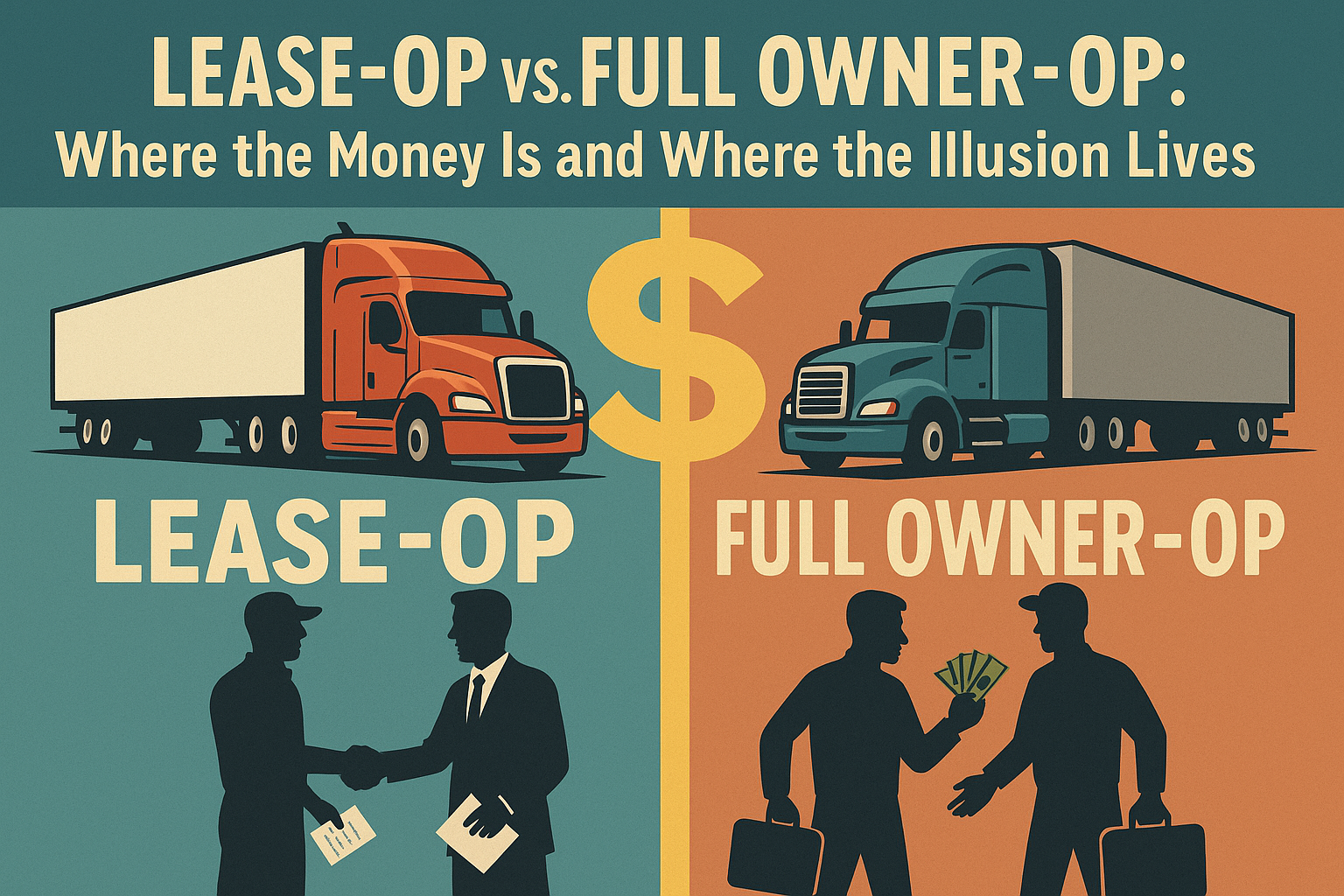
The lease-operator way and the full owner-operator way are two paths that attract thousands of truck drivers yearly inside the trucking business. Both are seen as better variations of company driving, both purported higher pay, both use the term “independence,” and both are promoted as a step toward the trucking industry. Yet, for a myriad of drivers, the anticipated income and the actual income still feel like two different planets — especially when comparing trucking income and net pay between the two models. A lease-op and an owner-op are not just two aspects of the same job but represent two fundamentally distinct types of business, especially when you compare driver income and owner operator pay. Lease op and the owner-op are not intended to be two versions of the same occupation. They are two business models fundamentally different, with different risks, different cost loads tied to trucking expenses, different contractual traps, and different long-term consequences. Drivers often figure this out when they feel they’re already out of the game — usually when the numbers no longer work in their favor.
In this article we are focusing on the different approaches of a lease operator and a full owner-operator (full owner op), the separation of the two, the leasing agreements of carriers, the real potential of making money and earning potential, and the lapses that commonly occur. May it be a situation where you are trying to buy a truck, looking into one on lease or simply make sense of how trucking payments function, this guide is designed to bring you the views on the system you would have with a networking instructor.
Why This Comparison Matters for New Drivers
To a beginner in the trucking business, lease purchase programs often look like the quickest path to “owner money.” Carriers emphasize:
- no credit checks
- no down payment
- walk-away flexibility
- instant access to higher gross pay
- “your truck, your freedom” marketing
Many rookies join these programs believing they are stepping into truck ownership. But ownership is not when your name is on the side of the truck — it is when your name is on the financial responsibility associated with a lease on agreement.
A full owner-operator carries true business liability, but also has true business control — the core of business responsibilities. A lease-op carries partial business responsibility, but often without control. This difference in understanding income is the very foundation of the concept. Lease to own programs blur this line even more.
Lease-Op vs Full Owner-Operator (Realistic Comparison)
| Factor | Lease-Operator | Full Owner-Operator |
| Control Over Loads | Low | High |
| Truck Ownership | None until final payment | Full ownership from day one (loan/title) |
| Net Pay Stability | Highly variable | Higher potential, but market dependent |
| Business Responsibilities | Medium | High |
| Ability to Reject Freight | Limited | Full discretion |
| Long-Term Equity | None | Builds equity over time |
| Risk Level | Medium–High | High |
| Freedom of Operation | Restricted | Full freedom |
How the Industry Thinks About Lease-Ops and Owner-Ops
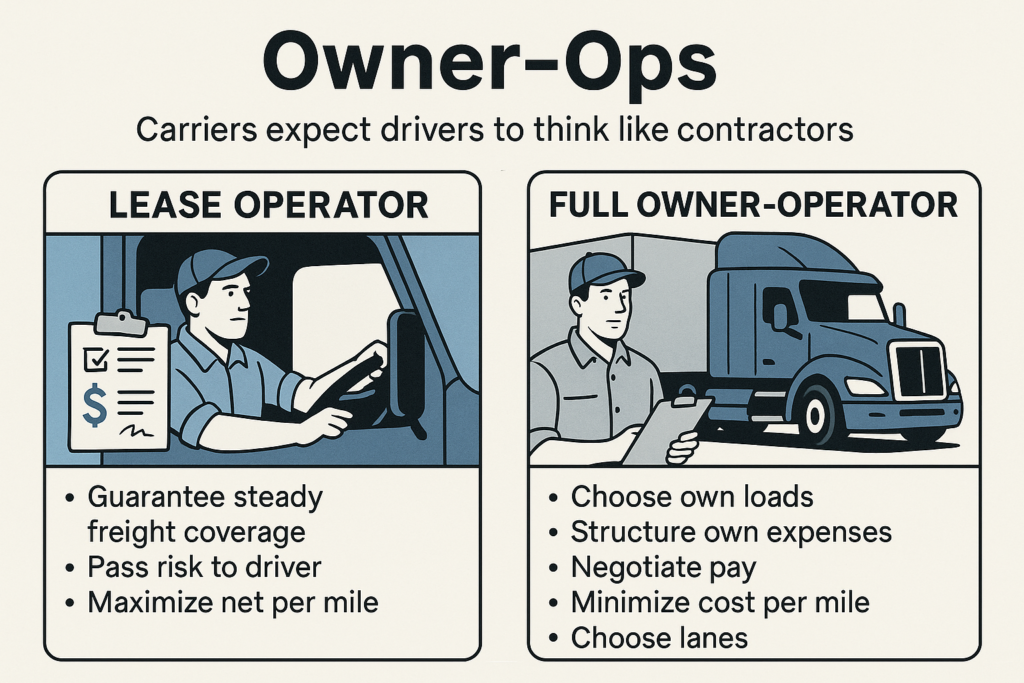
Just as examiners expect a CDL student to think like an inspector, carriers expect drivers to think like contractors. Unfortunately, most drivers approach lease programs with a company-driver mindset, while lease contracts are written in business-owner language that resembles truck leasing terms.
Carriers design the lease programs around three goals:
- Guarantee steady freight coverage
- Pass risk from carrier to driver
- Maximize the carrier’s net per mile
A lease agreement is not fundamentally bad — but its goal is not to make the driver rich. Its main goal is to make the carrier’s operations more predictable.
Conversely, full owner-operators manage their operations based on their own vision:
- choosing their own loads
- structuring their own expenses
- negotiating pay
- deciding how to minimize cost per mile
- choosing lanes with the highest revenue per hour
These differences arise from fundamental differences in the business structure between the two types.
What Lease-Ops Believe They’re Getting vs. What They Actually Get
Many lease-ops believe they are going to be part of a smaller version of an owner-op. However, the actual reality is very different.
You cover the most costs of an owner-op but have similar control to a company driver.
Lease programs often require:
- fixed weekly truck payments
- fixed insurance payments
- variable maintenance escrow deductions
- fuel cost responsibility
- tolls, scales, and repair responsibility
- downtime without pay
However, you do not always have control over:
- load selection
- Rates
- Lanes
- freight volume
- home time
- forced dispatch
- maintenance decisions
This is the clutter — you are responsible for a lot but you do little to control it.
Lease Op Vs Owner Op! What’s The Difference? @nohippietruckingandtransportat Reply
The Three Core Illusions of Lease Programs
Higher Gross Pay ≠ Higher Net Pay
It goes like this: In a week, a driver can see a revenue ticket of $4000 to $6000, but in reality, the net after deductions may fall below that of a company driver. Gross pay creates the illusion of wealth. Net pay reveals the truth, especially when compared to a truck driver salary.
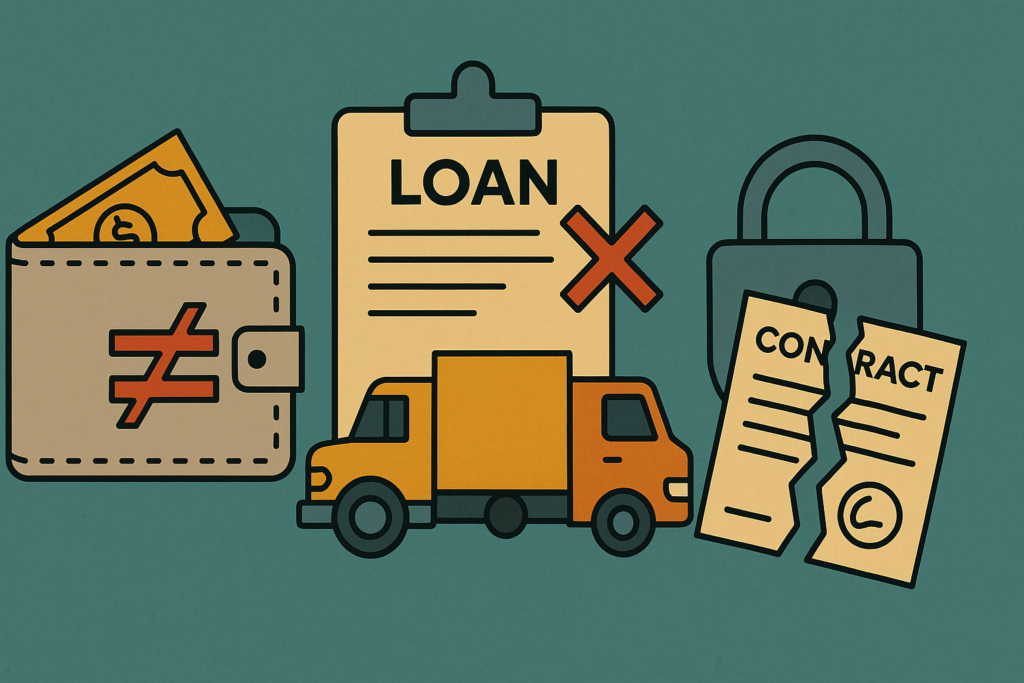
“No Credit Check” ≠ “No Risk”
The carrier keeps no credit risk; simultaneously, the driver takes the full operational risk. If by any chance what you have is a tight freight market, the driver is still paying truck payment, insurance, escrow deductions, fuel, and maintenance. A bad month can set a lease operator back more than a bad month sets back an owner-operator.
“Walk-Away Lease” Is Not the Same as “Zero Cost”
Getting lost in the walkings does not mean that you have:
- escrow losses
- previous week deductions
- debt accumulated from negative settlements
- unpaid repair balances
Many drivers walk away with less money than when they entered, falling into a financial trap they did not expect. Check link
Where the Full Owner-Operator Model Actually Wins
In contrast to a lease-operator, which is at the far end of the spectrum, full owner-operators actively choose whom to work with, decide how much their rates are, set their costs, and so on. A full owner-operator is at the opposite end of the spectrum:
- they own the truck (loan, cash, or finance)
- they control their freight
- they negotiate their revenue
- they decide their cost per mile
Full ownership is not automatically more profitable — it is simply more transparent.
An owner-op can:
- run only profitable lanes
- reject low-paying freight
- control home time
- choose backhaul strategies
- optimize fuel costs
- negotiate carrier split or run under their own authority
- align expenses with business goals for freight hauling
Control is what converts gross into net.
How CPM/RPM Determines Profitability
| Calculation Step | Lease-Op | Full Owner-Op |
| Cost Per Mile (CPM) | High (due to deductions) | Variable (driver-controlled) |
| Rate Per Mile (RPM) | Carrier-determined | Negotiated |
| Ability to Adjust CPM | Low | High |
| Ability to Adjust RPM | Low | High |
| Profit Formula | RPM − CPM (limited control) | RPM − CPM (full control) |
Where Lease-Op Actually Makes Sense
Lease programs are not a trap. They can influence driver decisions like:
- have weak credit or have no savings
- want to test-drive ownership responsibility
- need structured maintenance and insurance
- want faster access to owner-operator level pay
- prefer working under a carrier with guaranteed freight
- do not want the administrative burden of full ownership
Lease-op is a bridge, not a destination.
Where Lease-Op Turns Into a Financial Trap
The price of lease purchase bikes up when:
- the miles go down
- truck payment increases
- dispatcher calls the shots on load choice
- fuel prices exceed profit margins
- maintenance escrow is drained
- repairs outdo accrued escrows
- he initial signs of negative settlements appear
Where Full Owner-Operators Fail
Ownership also has illusions:
- overestimating revenue
- underestimating expenses
- poor tax management
- buying the wrong truck for the lane
- financing at high interest rates
- no emergency fund
- lack of business planning
A truck is a business asset, not a symbol. The wrong purchase can turn a strong driver into a bankrupt one.
What Beginners Misunderstand About Truck Ownership
A lot of new drivers view the truck as a company vehicle. This is one of the reasons they make financial mistakes in their early careers.
Beginners frequently think erroneously:
“Driving extra miles means automatically making extra money”
“Gross pay that’s high guarantees a good percentage for yourself”
“Leasing is in fact the easiest and most secure way to be the owner”
“The carrier will deal with the risks for me”
“The truck will cover the fuel costs”
In fact, the principle of privatizing is not focused on the number of miles driven. It is rather defined by how effectively a driver can manage and control costs on a per-mile basis, gets a stable rate per mile, and has a decision-making authority over the operation.
How to Evaluate Your True Earning Potential
The starting point for accurately assessing your earning potential is implementing financial discipline which is basically the same as what accountants and seasoned owner-operators do.
Step A — Assess the true cost of every mile including all operating expenses.
Step B — Compute your actual rate of paid per mile.
Step C — Objectively compare the two numbers.
Whenever your cost for a per-mile rate overshoots the local highway funds per mile, that particular operation is resulting in losses.If your rate per mile permanently overcomes your cost per mile you are making a profit.
Numerous lease-operators frequently skip the formalization of this analysis and, instead, concentrate more on the gross pay rather than net results. As opposed to that, owner-operators who last in the business throughout the years see this calculation as a must-have baseline in making all decisions.
.The Instructor’s Perspective: What Experienced Operators Want You to Understand
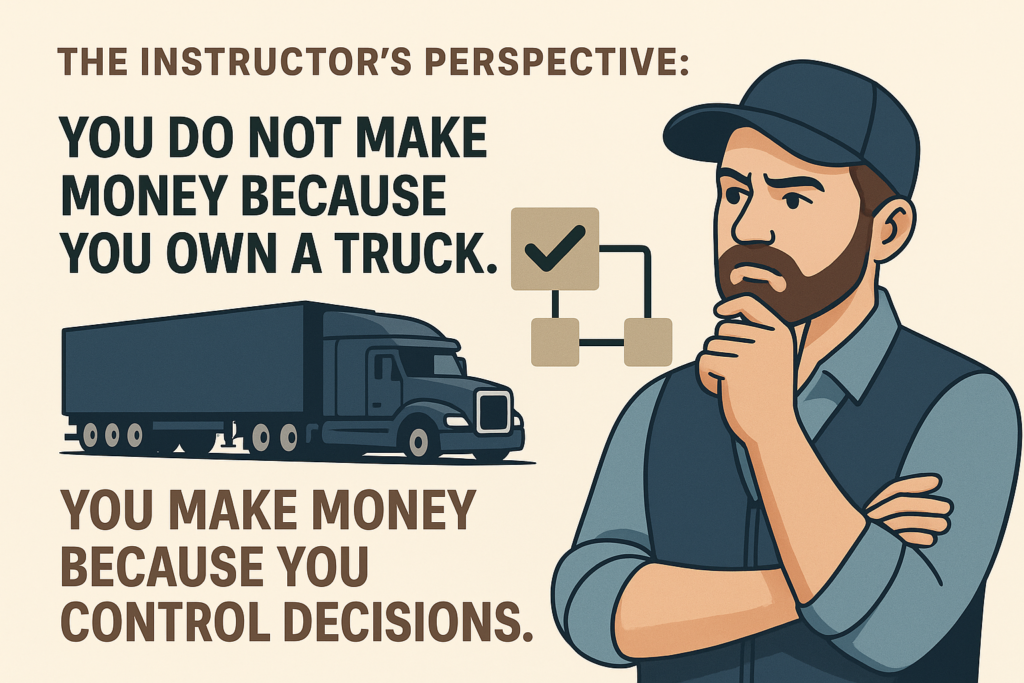
“You do not make money because you own a truck. You make money because you control decisions.”
Final Thoughts: Where the Money Truly Is
Lease-operator and (as opposed to a) full owner-operator models are two different types. A lease-op model is the lowest entry barrier of all and can be a real way for drivers such who are not yet ready to take on the entire financial risk. It gives you the necessary equipment and helps you out but the authority is still limited.
Full owner-operators are not on the same level obviously. They are carrying more weight but, at the same time, they get to fully decide — which costs to incur, which routes to take, when to deliver and what product strategy to follow. That is the point when they become equity holders, not just gain weekly income.
The actual money in trucking is not about the ownership of assets or papers. It comes from a driver being in control of the situation to the right extent of risk management, cost-cutting and discipline. The falsehood starts when responsibility escalates faster than control, which causes a lot of efforts without a clear picture of returns.
Lease-Op vs. Owner-Op
1. Can a lease operator earn more than a company driver?
Yes – However, only with strong freight and limited downtime. Many lease operators end up earning a little more than company drivers, but much less than owner-operators.
2. Why do many drivers call lease purchase a “trap”?
Because weekly payments are extremely high and drivers carry most expenses without having real ownership until the final payment.
3. Does a full owner-operator always make more money?
Not really. Poor load selection, high maintenance or bad money management may cut owner’s income. The model works if treated as a business.
4. Is Lease-op a good step to ownership?
Yes, it is a good route for many drivers to learn business operations before obtaining a truck.
Leave a Reply