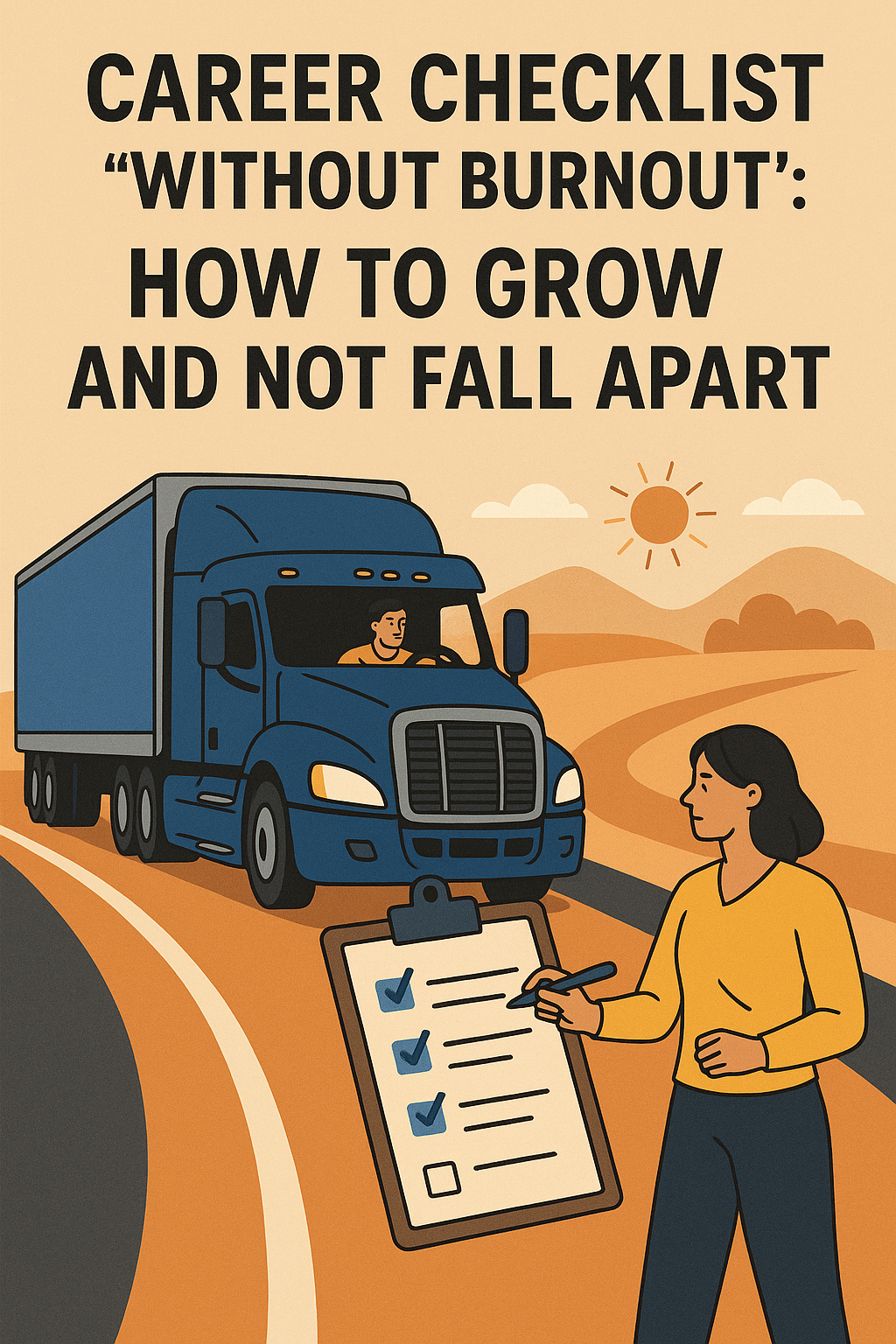
This article is directed specifically at truck drivers-those who are especially thinking of constructing a long-term truck driver career and grow professionally without losing their health, motivation, or work-life balance. Whether you are new to CDL driving or already experienced on the road these concepts are your way to avoiding the burnout and progressing in the trucking industry without compromising your mental health.
Dealing with the ever-increasing pressure in office culture requires not only the upward movement of the employee but also the healing and prevention of burnout to continue having a career. In the contemporary organizational environment, people are highly rewarded for their speed, intensity, extra hours and infinite availability of work — and that is precisely the road that leads to the downfall of workers at the very moment when their careers start to bloom. The true cause of career derailment is not the lack of talent, but rather the lack of a viable weaver strategy that protects mental health, improves workplace efficiency, and keeps job satisfaction intact. In other words, understanding how to grow while maintaining employee well being is a modern necessity.
This handbook serves as a career checklist for those who want to expand without burning out, specifically designed for people who sort long-term achievement as their first choice, not just for surviving crises over a shorter period of time. If you want to reach your milestones, enhance your professional development while keeping the work life balance, this roadmap will help you not fall apart and stay aligned with sustainable career practices.
The Main Reason People Get Burnout is While They Grow
It’s important to note that burnout does not come from working too hard never ever. It comes from a combination of pressures, unclear expectations, lack of recovery time, and never-ending responsibilities. In fact, a lot of professionals find that they are in a paradoxical situation: as soon as they advance in their careers, they tend to seek help with stress management less frequently, even though this stage requires strong career tips and strategies that prevent burnout.
TRUCKER TALK: How to PREVENT BURNOUT
Some of the typical burnout reasons during growth stages:
- increased duties without more support
- vague guidelines with your managers or clients
- with new tasks, switching frequently
- being under pressure to “prove yourself” in new roles
- the fear of slowing down or missing out
- emotional labor that is overlooked
Growth demands capacity — mental, emotional, and physical. The lack of sufficient capacity because of the mental and physical exhaustion results in many top talents falling apart. The absence of balance prevents career success and blocks people from achieving goals they are otherwise capable of.
A Career Checklist That Makes You Grow Without Breaking
The following career checklist is a clear, practical way to support the personal growth of your employee at the same time optimizing the well-being of your workforce. It ensures that as you progress, you also avoid exhaustion and cultivate a thriving career.
Career Growth Without Burnout Checklist
| Checklist Item | Why It Matters | What It Prevents |
| Clear priorities | Helps define what truly deserves attention | Avoids overwhelm and chaos |
| Boundaries with workload | Protects time + energy | Prevents exhaustion and fatigue |
| Weekly recovery rituals | Rebuilds focus and clarity | Slows down burnout progression |
| Feedback loops | Keeps development visible | Prevents stagnation and frustration |
| Delegation habits | Reduces cognitive load | Stops mental overload |
| Self-care minimums | Ensures long-term resilience | Improves mental health |
| Sustainable pace | Allows steady growth | Supports workplace wellness |
This checklist is the only thing you will need to stay together while pursuing success — a manual, not a run. It keeps your managing workload sensible and supports continuous career growth.
The Way to Set a Sustainable Pace for Career Growth
People tend to hinder their own future progress by making the false assumption that growth needs to happen quickly. On the other hand, adding a sustainable recipe for career advancement involves a different equation:
Consistency > intensity.
Habits > heroics.
Boundaries > burnouts.
What a balance of growth looks like is as follows:
- you increase responsibilities at a manageable pace
- you choose challenges you can realistically handle
- you choose long-term projects instead of “urgent” tasks
- you prioritize learning over the constant demand of being busy
- you measure progress in terms of milestones, not by getting exhausted
Burnout comes when people run with their speed training for sprint marathons. Growth occurs when people learn to run steadily — this is the foundation of a sustainable career.
Mental Health as a Career Skill (Not a Luxury)
For a career to flourish, it is necessary to have a thriving mind. Although this truth is often overlooked by modern workplaces, high performers know. They are well aware that without ongoing self care, career success is impossible.
Although this truth is often overlooked by modern workplaces, high performers know:
- concentration is a tool
- creativity requires recovery time
- resilience can be developed like a muscle
- stress management helps improve performance
Easy-to-do Mental Wellness Checks
Make weekly self-inquiries:
- Do I get out of bed energized or am I still yawning?
- Is my workload manageable without constant stress?
- Do I still feel purpose and direction?
- Am I avoiding work tasks because I feel overloaded?
- Do I have time for life outside of work?
If three or more of these queries bother you — it is not “coming” but already impacting you, cher burnout. Addressing this early helps with overcoming challenges before they turn into breakdowns.
How to Manage Workload Before It Manages You
It has never been about being lazy when the topic is burnout; it is about the lack of pace. To avoid that scenario, what is really important is to practice workforce management actively and maintain a balanced approach to managing workload.
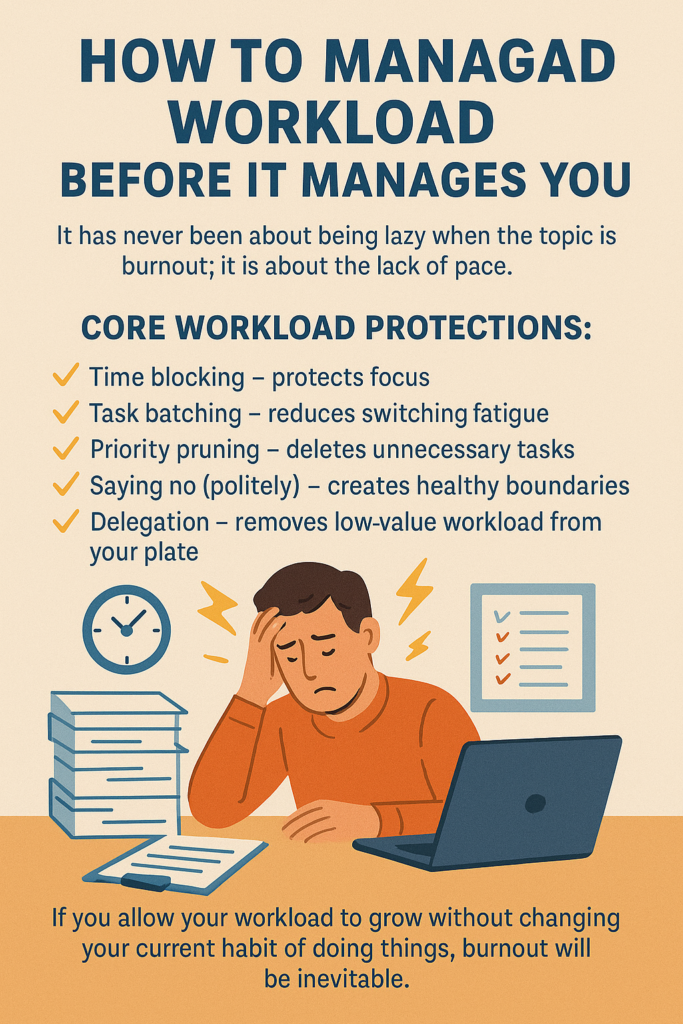
Core Workload Protections:
- Time blocking – protects focus
- Task batching – reduces switching fatigue
- Priority pruning – deletes unnecessary tasks
- Saying no (politely) – creates healthy boundaries
- Delegation – removes low-value workload from your plate
If you allow your workload to grow without changing your current habit of doing things, burnout will be inevitable.
Work Life Balance Is Not the Outcome — It’s the Method
Generally speaking, time management comes when you achieve balance in work and personal life. However, the truth is, it is the balance that must come before time management. This is the core principle of maintaining work life balance. Avoiding truck driver burnout!
People with balance:
- are less prone to emotional breakdowns
- predict better in the long term
- communicate more clearly
- are more motivated and have energy for a longer time
- solve problems more easily
People without balance:
- work in hyperdrive, instead of strategy
- burn out faster
- experience job dissatisfaction
- make choices by reacting
Being successful in your career does not mean you have to go against the necessity of energy management.
Professional Development Without Overload
The main mistake people keep making while learning new skills is that they try to learn everything at the same time. True professional development is slow, strategic, and steady.
Logical and proportional development is:
- master one small new skill at a time
- avoid “urgent skills chasing”
- implement the new skill before learning more
- check progress weekly, not hourly
Smart Development Strategy:
| Strategy | Impact Level | Burnout Risk |
| One-skill focus | Very high | Very low |
| Multiple-skill stacking | Medium | Medium |
| Intensive learning sprints | High | High |
| No development at all | Zero | High |
The best way is to take just one skill at a time.
The Hidden Link Between Burnout and Identity
The truth is, the reason most professionals resemble a broken toy is that they attach their identity to their performance. This restricts career advancement and destroys confidence.
Identity burnout clues:
- feeling worthless not to be productive
- associating rest with falling behind
- not being true to your belief
- feeling guilty for saying no
- feeling worthy only through achievement
Tell yourself:
“Growth is my choice, I do it because I want to not because I fear to stop.”
Obstacles Are Part of the Journey — Not Breaking Is the Goal
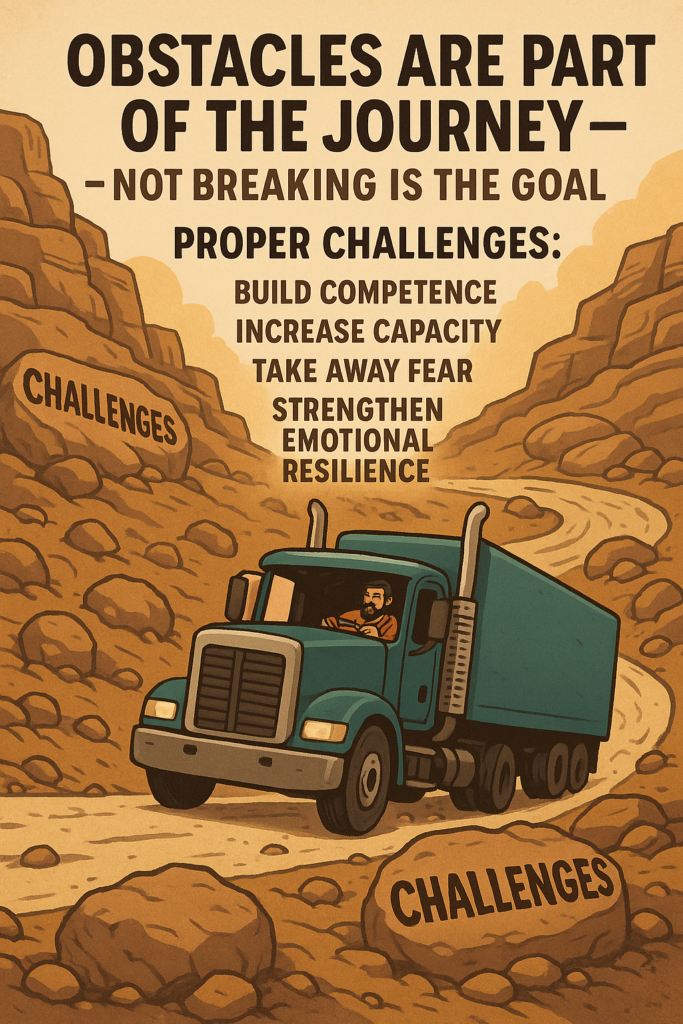
All professions have their difficult seasons. The aim is not to remove challenges — but to avoid collapse. This perspective creates room for career growth without compromise.
Proper challenges:
- build competence
- increase capacity
- take away fear
- strengthen emotional resilience
Bad challenges:
- take away more than they give
- do not allow for recovery
- create chronic stress
- lead to burnout
Your job is to distinguish between the two and choose a sustainable career path that supports your health and potential.
Your Sustainable Career Path: A Final Checklist
Here is the full Career Growth Without Burnout Checklist you can check weekly:
✔ PRIORITIES – Do I know what matters this week?
✔ WORKLOAD – Is my plate realistic?
✔ ENERGY – Do I feel mentally grounded?
✔ BOUNDARIES – Am I protecting my time and mind?
✔ GROWTH – Am I progressing at a healthy pace?
✔ WELL-BEING – Do I still feel like myself?
If at least four items say “yes”, it means you are growing sustainably.
FAQ
1. Can career growth really happen without burnout?
Yes. Respecting boundaries, pacing wisely, and applying simple career tips ensures you grow steadily while you avoid exhaustion and keep a thriving career.
2. How do I know if I’m close to burnout?
Early signs include chronic fatigue, irritability, and feeling overwhelmed. These are signals to pause and use self care routines that prevent burnout.
3. What role does work-life balance play?
It’s a productivity tool. Balanced workers think more clearly, avoid impulsive decisions, and reach career success faster.
4. Is professional development safe during stress?
Yes — in small steps. Sustainable skill learning supports achieving goals without overload.
5. How do I discuss workload with a manager?
Frame it around productivity:
“I want higher-quality results. Let’s clarify priorities so I can focus where it matters.”
This helps with managing workload professionally.
6. Does avoiding burnout mean avoiding ambition?
Not at all. Healthy ambition means striving while maintaining employee well being.
7. What’s the biggest mistake people make while growing?
Trying to grow too fast. Real progress is steady and aligned with sustainable career principles — a path where overcoming challenges doesn’t cost your health.
Leave a Reply